
It sounds so simple, picking a new toilet seat. But with six shapes, three different fixings and a dozen finishes, it's easy to end up with one that doesn't fit.
So we've done the leg work for you and fully updated this guide for 2026, covering everything on the types of toilet seats available, their fittings, sizes, and materials.
In this guide:
- Toilet Seat Shapes
- Toilet Seat Materials
- Toilet Seat Types
- Toilet Seat Sizes
- Types of Toilet Seat Fixings
Just before we dive in, our Black Friday bathroom sale is our biggest sale of the year and it's on now with great deals across the range including toilets and basins.
Toilet Seat Shapes
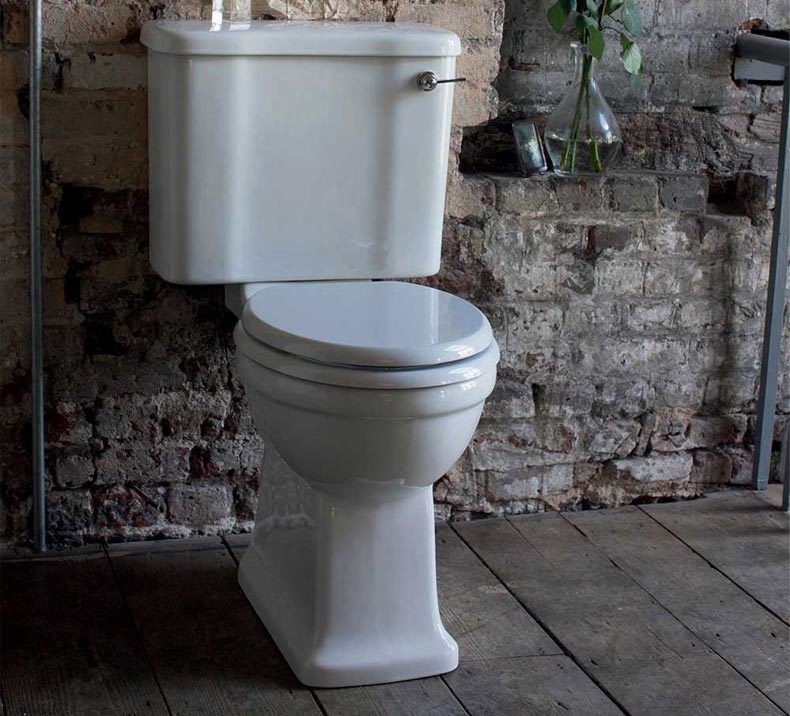
Pointed
Pointed, or elongated toilet seats are also very common. They're available in a range of styles and again, tend to be featured prominently in traditional designs.
Most people find elongated or pointed toilets more comfortable, although they are more expensive than rounded designs and take up slightly more space.
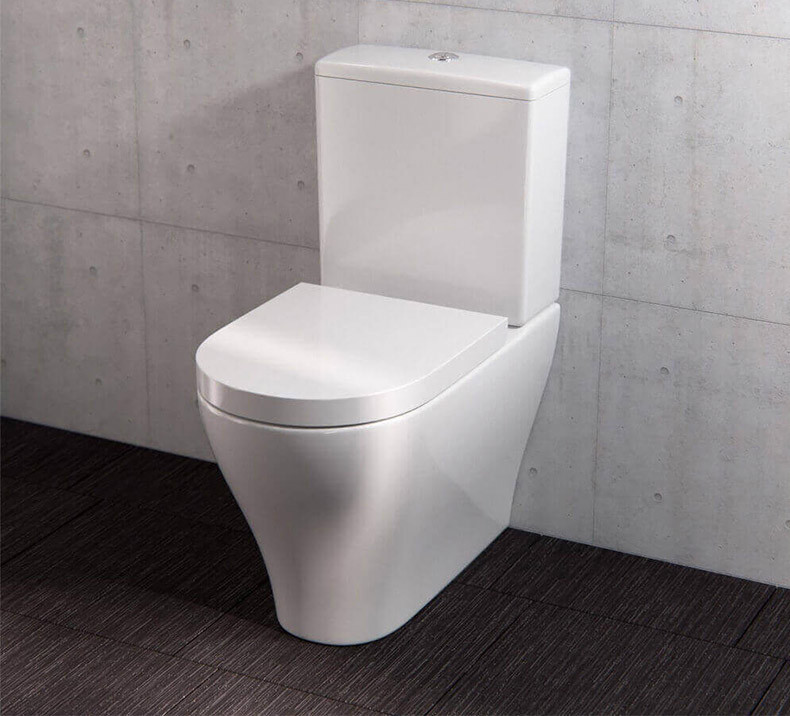
D-Shaped
Like square-shaped seats, D-shaped toilet seats are modern and stylish. They pack a little less of a punch aesthetically than square-shaped seats, so are great for those who want a modern feel in their bathroom without going too overboard.
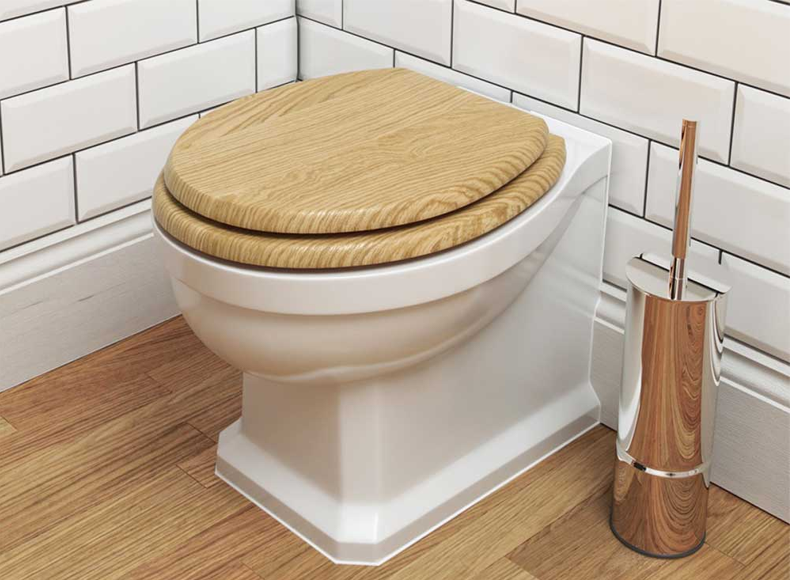
Rounded
Round toilet seats are common in older designs and suit traditional bathrooms. Round toilets don’t take up as much room as other designs, so they suit those who lack space.
They may look simple and understated, but round toilet seats can do wonders when it comes to giving your bathroom a more traditional feel.
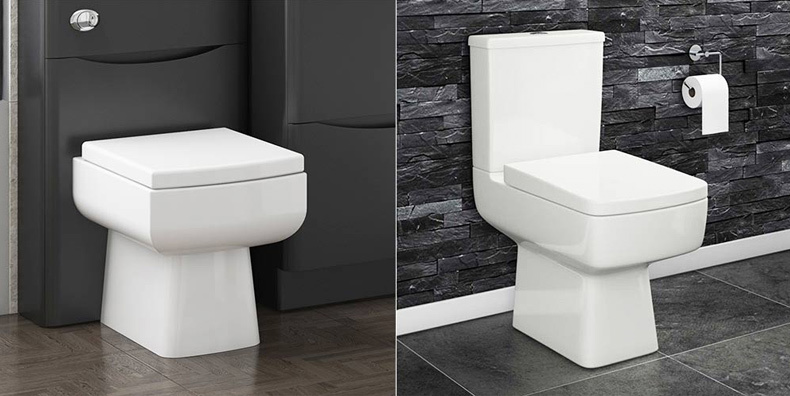
Square
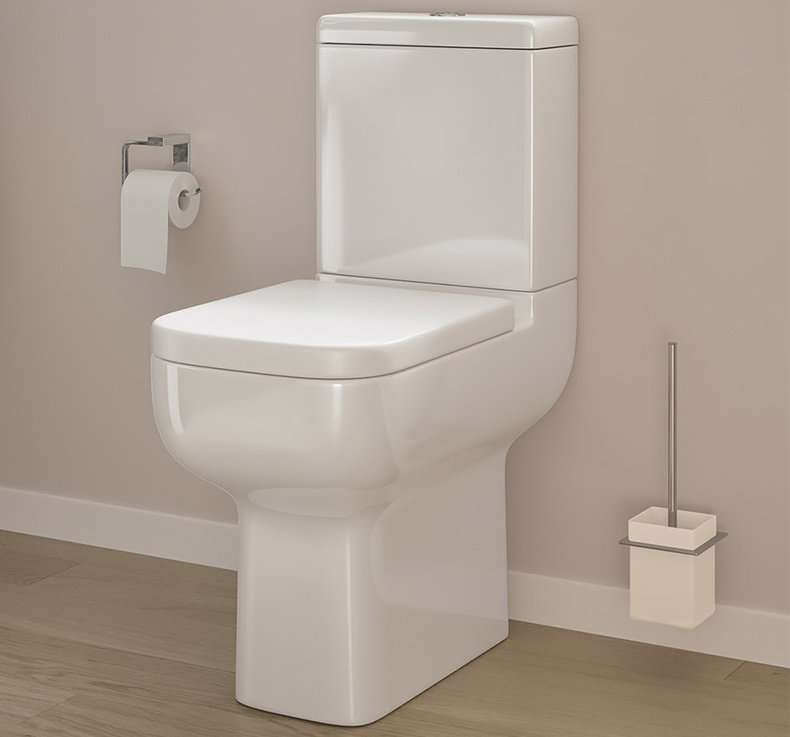
Square seats are common in minimalist styled bathrooms. They are modern, generally soft-close and angular, making them great for people who want to add a modern touch to their bathroom.
Wrap-over seats
Wrap-over seats have a lid that completely covers the seat. This makes them minimalist, modern and stylish. They help to keep things neat and compact, in addition to maintaining a hygienic seat that's protected by the top lid.
They can be purchased in a variety of shapes but we love the square or D-shaped versions for that extra modern punch.
Traditional
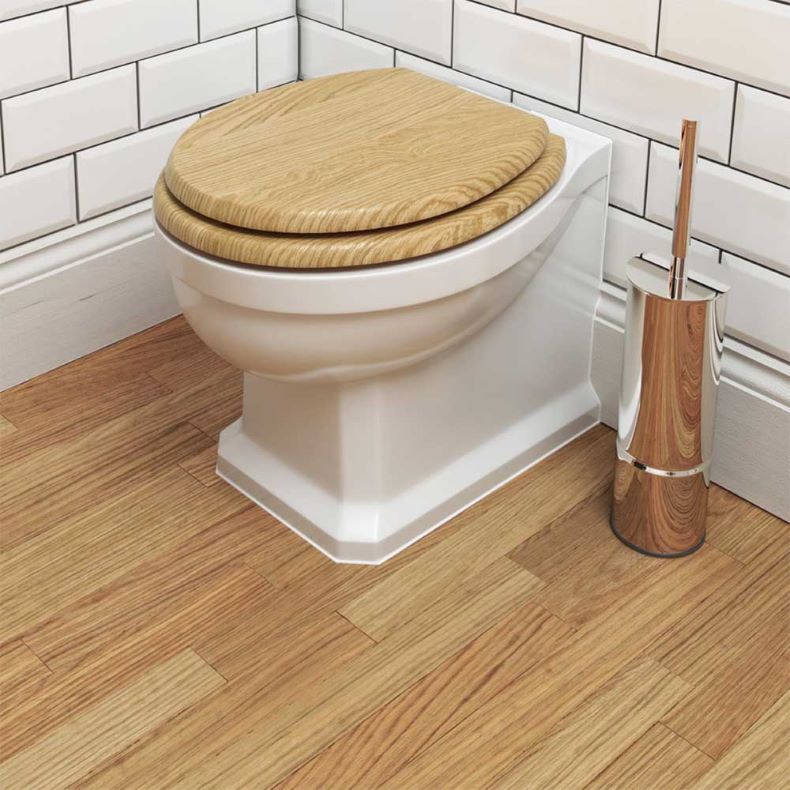
A vintage bathroom needs a vintage toilet seat to match, and your options are practically endless. Traditional seats are often oval or throne seats, and come in a choice of wooden finishes.
Those of you who want the look of a vintage seat with the features of a modern design don’t have to miss out - soft close seats with a vintage look are readily available.
The Butler & Rose Catherine Walnut toilet seat is one of our absolute favourites here at Drench thanks to its intricate natural wood design and timeless appeal.
Toilet seat materials
Toilet seats generally come in a choice of two materials, plastic or wood.
Plastic toilet seats
Plastic seats are more common. They are cheaper, more malleable and easy to clean. The main types of plastic used are Thermoplastic and Thermoset, although plastic resin is another option.
Thermoset is slightly more expensive as it’s more scratch resistant, but all three types are durable. Resin toilet seats can be made in any colour, and items or pictures can be embedded into the surface of the seat. This makes them great in a kid’s bathroom.
The main issue with plastic seats is they can get cold in winter - not something you should have to endure first thing in the morning!
Wooden toilet seats
Wooden toilet seats are less able to withstand wear and tear, but they will offer you a warmer seat in the winter! Natural wood toilet seats look more traditional and can be purchased in an array of finishes to suit your bathroom. The two types of wood most commonly used include MDF or engineered wood, and solid wood.
MDF wooden seats consist of pressed wood fibres. This makes them hygienic, comfortable, and easy to clean. Solid wooden seats are often made from oak, pine or mahogany. While solid wood seats look fantastic, their durability can vary hugely - so it’s worth doing your research before you buy.
Types of toilet seat
Soft close seats
Soft close hinges are, in our opinion, one of the best inventions around, as there’s nothing more rage-inducing than the sound of a lid-slam in the morning. Soft-close seats are easy to operate and can now be bought very cheaply.
Ultra-slim seats
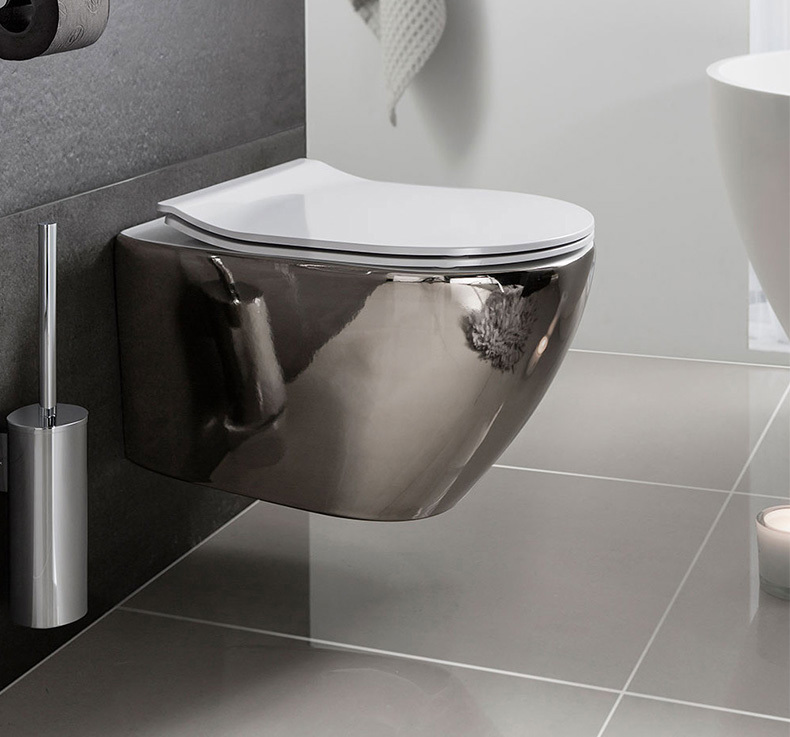
Ultra-slim seats are modern and minimalist, suiting practically any bathroom and often available with soft-close hinges. Whilst not specifically designed for smaller bathrooms, they will certainly help your bathroom to look bigger - whereas bulkier seats won’t do you many favours when it comes to space-saving.
Despite not taking up much room, ultra-slim seats really pack a punch design-wise. Combining them with other modern features such as smart technology or heat pads will give you at toilet to be proud of - and that’s not something many people can say!
Bidet seats/Smart seats
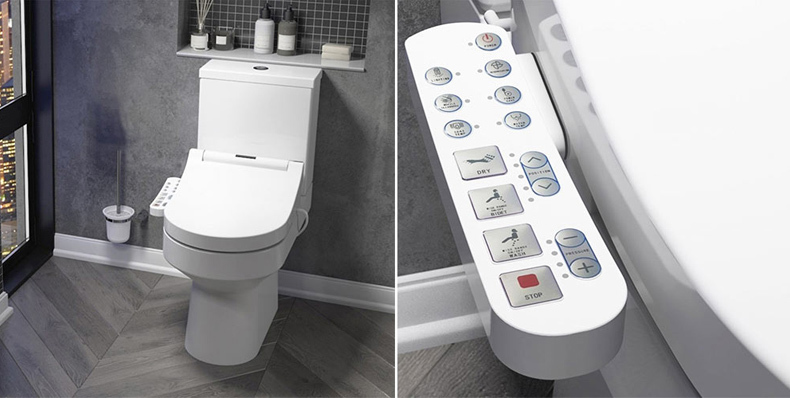
Technology is everywhere, and now it’s in our toilet seats! Japanese-style toilet seats are rapidly growing in popularity in the Western world, thanks to the huge amount of comfort they offer.
These smart toilet seats have everything you could ever need from a toilet seat. Some are available with a huge range of features including adjustable heated seats, LED lighting (for both the day and night time), deodorising capability, air dryer temperature levels, automated cleaning, energy saving mode and adjustable water and temperature levels.
Take a look at the latest smart toilets from TOTO and Geberit.
Toilet seat sizes in the UK
There isn’t a single universal toilet seat size in the UK. Lots of different toilet seat sizes are available but the most common sizes tend to be between 350mm and 500mm. Toilet seats vary by both size and shape so it’s important to know which size you need before investing in a new one.
What Size Toilet Seat Do I Need?
To work out what size toilet seat you require, you need to measure your pan in three places. Remove your current toilet seat first.
- Measure from post hole to post hole at the back of the seat area.
- Calculate the width of the bowl where it is the widest
- Measure from the front of the toilet seat back to the post holes.
These measurements tell you what size you need. Toilet seats will show the width and depth in millimetres.
Understanding the types of toilet seat fixings
Most people choose a toilet seat based on looks alone. You want it to match the rest of your bathroom, sit well against the tiles, and look like it belongs. But the fixing underneath can have other ideas.
The hinges and the fixings matter just as much as the shape, since they decide whether the seat you've picked will attach to your toilet. Get the fixing wrong, and there's no way around it.
Top fixing toilet seats work by feeding two bolts into the pan, which are then tightened from the top. Bottom fixing toilet seats are fitted from the top and then tightened from underneath, often with a wing nut.
The fixing has to match your toilet, whatever seat you've chosen, so it's worth checking before you buy.
Toilet seat fixings at a glance
-
Top-fix: tightens entirely from above, no reaching underneath
-
Bottom-fix: bolts feed through from the top, secured with a wing nut underneath
-
Bottom-fix suits classic, open-back toilets
-
Top-fix suits wall-hung or back-to-wall toilets
-
Top-fix seats also work on bottom-fix toilets
To find out which one yours needs, reach underneath the pan near the hinge holes. If you can feel a bolt and nut, you've got a bottom-fix toilet. If there's nothing there, it's top-fix.
How much do toilet seats cost?
Like most household products, the price of toilet seats can vary by quite a considerable amount. Cheap and cheerful seats are readily available for those of you on slightly more of a budget, while fancy high-tech, high-quality and subsequently high-price-tag seats are also proving popular.
It’s important to be aware that your toilet seat gets a lot of use. Opening and closing the lid multiple times a day will take a toll on the hinges, and so investing in something high-quality is the best bet.
In bathroom styling, it’s often the smallest pieces that matter most, and the toilet seat is one of them.
Whether you’re inspired by the high-tech and comfort of the Japanese designs, or you opt for a simple wooden seat to create that traditional feeling - you’ll be spoilt for choice with our range of toilet seat styles.


